Illustration of illusion
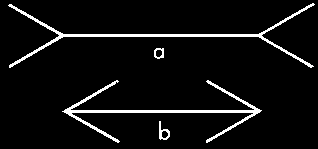
- a and b are equal in length


Allusion and Illusion
Allusion and illusion may share some portion of their ancestry (both words come in part from the Latin word ludere, meaning “to play”), and sound quite similar, but they are distinct words with very different meanings. An allusion is an indirect reference, whereas an illusion is something that is unreal or incorrect. Each of the nouns has a related verb form: allude “to refer indirectly to,” and illude (not a very common word), which may mean “to delude or deceive” or “to subject to an illusion.”
 R. Eric Thomas, Chicago Tribune, 2 May 2026
Some of the outfits seem to confer the power of flight, though that illusion is fostered by the delirious energy of human forms liberated from conformity.
—Theater Critic, Los Angeles Times, 1 May 2026
Don’t indulge the illusion as a way to bypass what’s occurring at the moment.
—Valerie Mesa, PEOPLE, 30 Apr. 2026
That any guidepost is reliable is an illusion.
—Literary Hub, 30 Apr. 2026
See All Example Sentences for illusion
R. Eric Thomas, Chicago Tribune, 2 May 2026
Some of the outfits seem to confer the power of flight, though that illusion is fostered by the delirious energy of human forms liberated from conformity.
—Theater Critic, Los Angeles Times, 1 May 2026
Don’t indulge the illusion as a way to bypass what’s occurring at the moment.
—Valerie Mesa, PEOPLE, 30 Apr. 2026
That any guidepost is reliable is an illusion.
—Literary Hub, 30 Apr. 2026
See All Example Sentences for illusion
“Illusion.” Merriam-Webster.com Dictionary, Merriam-Webster, https://www.merriam-webster.com/dictionary/illusion. Accessed 5 May. 2026.
illusion
noun
illusion
noun

 Copy Citation