Illustration of retort
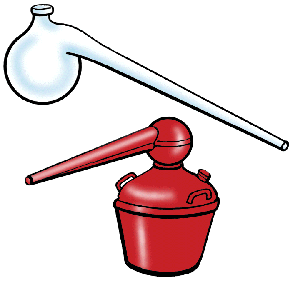
- 3retort
 Winston Churchill
Meredith Colias-Pete, Chicago Tribune, 24 Apr. 2026
Hellerstein retorted in one exchange with the prosecutor, questioning how the Maduros’ ability to pay their lawyers had any bearing on national security.
—Molly Crane-Newman, New York Daily News, 26 Mar. 2026
Judith Martin, Sun Sentinel, 28 Apr. 2026
Bruins fans didn’t have much of a retort, either.
—Matthew Fairburn, New York Times, 27 Apr. 2026
See All Example Sentences for retort
Winston Churchill
Meredith Colias-Pete, Chicago Tribune, 24 Apr. 2026
Hellerstein retorted in one exchange with the prosecutor, questioning how the Maduros’ ability to pay their lawyers had any bearing on national security.
—Molly Crane-Newman, New York Daily News, 26 Mar. 2026
Judith Martin, Sun Sentinel, 28 Apr. 2026
Bruins fans didn’t have much of a retort, either.
—Matthew Fairburn, New York Times, 27 Apr. 2026
See All Example Sentences for retort
“Retort.” Merriam-Webster.com Dictionary, Merriam-Webster, https://www.merriam-webster.com/dictionary/retort. Accessed 1 May. 2026.
retort
1 of 3 verb
retort
2 of 3 nounretort
3 of 3 noun
Verb
from Latin retortus, past participle of retorquēre, literally "to twist back, hurl back," from re- "back, again" and torquēre "to twist" — related to distort, extort, torture
Noun
from early French retorte "a vessel in which substances are distilled," derived from Latin retortus, past participle of retorquēre "to twist"; probably so called from its shape
retort
noun
ˈrē-ˌ
 Copy Citation