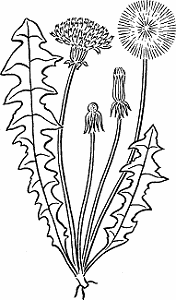
Illustration of dandelion

 Molly Burford, Southern Living, 1 May 2026
Dried dandelion root is even sold as a caffeine-free coffee substitute, fetching over $31 a pound in stores — outpricing prime rib and lobster, according to MOFGA.
—Ryan Brennan, Sacbee.com, 1 May 2026
National Geographic notes that dandelion roots can loosen compacted ground, improving aeration and reducing erosion.
—Ryan Brennan
may 1, Miami Herald, 1 May 2026
There’s also the question of whether dandelions are even the pollinator superfood the trend implies.
—Ryan Brennan
may 1, Charlotte Observer, 1 May 2026
See All Example Sentences for dandelion
Molly Burford, Southern Living, 1 May 2026
Dried dandelion root is even sold as a caffeine-free coffee substitute, fetching over $31 a pound in stores — outpricing prime rib and lobster, according to MOFGA.
—Ryan Brennan, Sacbee.com, 1 May 2026
National Geographic notes that dandelion roots can loosen compacted ground, improving aeration and reducing erosion.
—Ryan Brennan
may 1, Miami Herald, 1 May 2026
There’s also the question of whether dandelions are even the pollinator superfood the trend implies.
—Ryan Brennan
may 1, Charlotte Observer, 1 May 2026
See All Example Sentences for dandelion
“Dandelion.” Merriam-Webster.com Dictionary, Merriam-Webster, https://www.merriam-webster.com/dictionary/dandelion. Accessed 5 May. 2026.
dandelion
noun
from early French dent de lion "dandelion," literally, "tooth of the lion"; dent derived from Latin dens "tooth" — related to dental
dandelion
noun
 Copy Citation